

Nebraska wind doesn’t politely warn shingles before it hits. Open landscape, no terrain to slow the gusts, and a thunderstorm season that regularly produces 60 to 80-mph straight-line winds means Omaha and Lincoln roofs take direct hits that homes in more sheltered states never see.
The biggest mistake we see Nebraska homeowners make is assuming “the roof looks fine from the ground” means nothing happened. A lot of wind damage is invisible from the yard, and most insurance policies only pay if you file within a specific window after the storm. Both reasons to take a closer look after any major Nebraska wind event.
Storm just hit your area? Call us at (402) 464-2418 or schedule a free post-storm inspection online. We’ll walk the roof within 48 hours, document everything with dated photos, and tell you straight whether you’re looking at a repair, an insurance claim, or no action needed.
Why Nebraska Wind Is Different
Nebraska sits in a wind corridor across the central plains. There’s no mountains, no large forests, nothing to slow weather systems between the Rockies and Lake Michigan. That geography means higher average wind speeds, frequent severe thunderstorms (March through September brings 30 to 50+ thunderstorm days a year), straight-line wind events with microbursts and downbursts producing 70 to 100 mph gusts, and periodic tornado activity. The Omaha-Lincoln corridor sits on the edge of Tornado Alley.
Standard asphalt shingles are warranted to 110 to 130 mph depending on the line. That sounds generous until you factor in that warranty ratings assume new installation, perfect nailing, and intact seal strips. Real-world Nebraska shingles, especially after a few years of UV exposure and freeze-thaw cycling, lose wind resistance well before they’re due for replacement.
The Five Ways Wind Damages Shingles
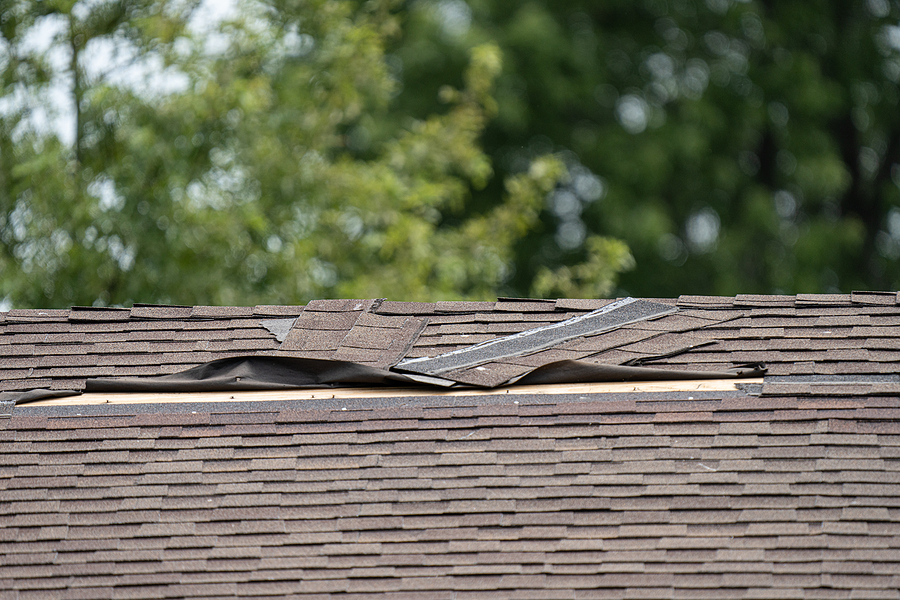
1. Lifted tabs. Wind catches the leading edge of a shingle and lifts it. If the seal strip holds, the shingle drops back. If it breaks (very common on shingles older than 8 to 10 years), the tab stays lifted and every subsequent rain puts water under the shingle.
Most common Nebraska wind damage pattern.
2. Creased shingles. The tab lifts hard enough to crease at the seal line, then drops back. The crease isn’t visible from the ground. Shingle looks fine. But the crease is a stress fracture that will fail within a year, sometimes much sooner.
Most under-claimed damage type because nobody sees it from the yard. Crease patterns are one of the first things we document during a professional Omaha roof inspection.
3. Missing shingles. Seal strip fails entirely and the shingle blows off. Obvious from the ground. Often happens in clusters along the same slope or windward edge.
4. Granule loss. Wind-driven debris (small branches, gravel, hail mixed with wind) scours granules off the shingle surface. The mat underneath gets exposed to UV and shingle lifespan drops fast.
5. Underlayment exposure. Enough shingles damaged or displaced and the underlayment is the only barrier between water and your deck. Modern synthetic handles a few days; older felt can’t. Active leaks usually follow.
What to Look For After a Nebraska Wind Event
From the ground: missing shingles especially along ridges and windward slopes, shingle debris in the yard or gutters, granules washed out at downspout discharge points, bent or twisted vent stacks and flashing.
From a ladder (safely, someone holding the base): lifted tabs along courses, creased shingles (look for white lines across the tab where the crease occurred), loose or backed-out nails, displaced flashing around chimneys.
From inside the attic: daylight visible where shingles are missing, damp insulation, fresh staining on the underside of the deck, wet rafters near roof penetrations.
If you see any of the above, schedule a professional inspection within 48 to 72 hours. Damage gets worse with every subsequent rain.
For broader claim context, see our Omaha storm damage roof repair page.
When to File an Insurance Claim

Most Nebraska homeowner policies cover storm-driven wind damage with a deductible (typically 1 to 2% of the dwelling coverage amount, sometimes a flat $1,000 to $2,500).
File when: damage is widespread (multiple slopes), missing shingles visible from the ground, active leak has started, repair cost is materially higher than your deductible, the storm was a documented severe weather event with NWS records.
Skip and pay out of pocket when: only a few shingles need replacement and total cost is under $500 to $1,000, the repair is less than your deductible, you’ve already filed claims recently and worry about premium impact.
Talk to a roofer first, then your insurance agent.
Anyone promising to “cover your deductible” is committing insurance fraud in Nebraska. Walk away.
Emergency Action
If shingles are missing and rain is forecast, get an emergency roof tarp on within 24 hours. $500 to $1,200 in tarp work prevents the much more expensive interior damage that follows an open roof.
Preventing Wind Damage on Your Next Roof

Several upgrades meaningfully improve wind resistance: High-wind-rated shingles. Architectural shingles rated 130 mph are standard. Some lines (GAF Timberline HDZ with LayerLock, CertainTeed Landmark) go 130 to 150 mph.
Pricing-wise, see new asphalt shingle roof cost in Omaha for what each tier runs.
Six-nail installation pattern. Nebraska wind code typically requires six nails per shingle in high-wind zones instead of the four-nail standard. Costs a bit more in labor but dramatically increases pull-through resistance.
Starter strips at eaves and rakes. Proper starter strips anchor the first course against uplift. Skipping them (or using cut-up shingles instead) is one of the most common shortcut Nebraska wind exploits.
Hand-sealing in cold installs. Shingles installed below 45°F often don’t self-seal. Hand-applying asphalt cement during winter installs creates the seal before the first wind event.
FORTIFIED framing. For homeowners in higher-risk parts of the metro, becoming an IBHS FORTIFIED-certified roof system upgrade pairs hurricane straps with sealed deck construction for the best survival math in extreme wind.
Quick Answers
How long do I have to file? Most Nebraska policies require notice within 30 to 90 days. The faster you file, the easier the claim. Damage from three years ago is often non-claimable even if real.
Can I file for wind damage if no shingles are missing? Yes, if a professional inspection documents creased shingles or seal-strip failures. Photo evidence is critical.
Why didn’t my neighbor’s roof get damaged when mine did? Microbursts are highly localized. Roof age, shingle quality, installation quality, and exposure all factor in. Two identical houses can see completely different outcomes.
Are impact-resistant shingles also more wind-resistant? Generally yes. The more flexible asphalt mat and stronger reinforcement that handles hail also improves wind resistance. Combined discounts often apply.
Why Nebraska Homeowners Trust Nelson Roofing
Nelson Roofing has been on Omaha and Lincoln roofs through every major wind event for years. Locally owned Nebraska company, GAF and Owens Corning certified, A+ BBB, IBHS FORTIFIED-certified, fully licensed and insured. We don’t subcontract to out-of-state crews. We work directly with every major Nebraska insurance carrier, and every inspection includes dated photo documentation suitable for claims.
Book a Free Post-Storm Inspection
If a Nebraska wind event just hit your area, the cheapest move is a free professional inspection.
Two easy ways to get started:
We service Omaha, Lincoln, Bellevue, Papillion, La Vista, Gretna, and the surrounding Nebraska metro.